It should come as
no surprise to anyone that I like science. There is just so much about it that
is awesome. Look at all the toys that science gives us, like R/C Cars and
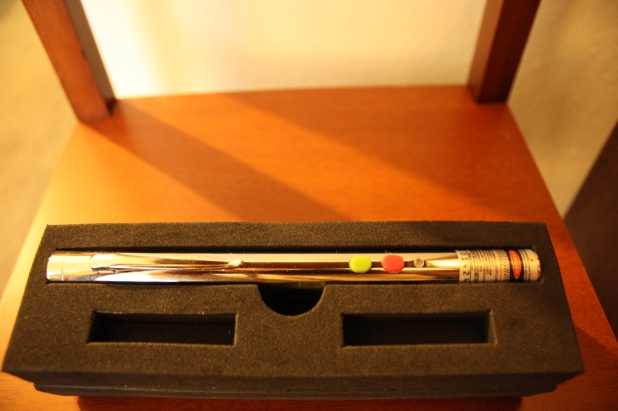
helicopters (Did I mention I got a new laser pointer?) Or what about all of those
handy dandy tools, gadgets, and gizmos that we have, thanks to science. You've
got things like power tools and non-stick pans and the triumvirate of
computers, cell phones, and the internet. If nothing else, the lifesaving
technologies that we have available to us (thanks vaccines!) are rooted in
science. If you're of a more philosophical nature, when we seek to
understand the world we expand our potential both as a species and as
individuals. The knowledge that the scientific process creates can be used to
enrich our lives. It can create new markets and new ways for people to exhibit
their genius. Plus, science makes fireworks more awesome.
If I had to choose
a favorite aspect of science then I must say that it is the scientific mindset.
I like the idea of curiosity run rampant. But a curiosity self-tempered by
critical analysis and empirical observation. I want to know about the world. I
want to understand how it works. I find joy and beauty in reality. There is a
depth and breadth of ideas available to me. There is a multitude of ways to
explain the world. Some are right and some are wrong, and it is through
critical analysis and empirical evidence that I can tell the difference. To me,
the scientific mindset is innately curious, rigorous in its self-examination,
skeptical, and above all, absolutely in love with the real world. That
resonates with me.*
I think that what I
find most attractive about this way of thinking is its versatility. The tools
and techniques used in biological chemistry are vastly different from those
used in astrophysics. How a historian goes about their business is different
than that of a sociologist. The very nature of the topic explored dictates such
changes. Yes, there is a ton of overlap between areas, and they all make use of
mathematics. They may have surface differences, but they are fundamentally the
same thing. And it is precisely that fundamental similarity that I am talking
about. The drive to understand the world through logic and empiricism
underscores much of science.
I have long thought
that the mind of science could have much more widespread use than it does now.
Consider social programs, such as foreign and domestic aide. We have to get a
grapple on the magnitude and complexity of the problems; we have to find their
cause. We have to figure out ways to cure or alleviate the symptoms, and we
need ways to check that our plans are working. We could also consider civic
law. What laws work, which don't? What are the ultimate goals of our laws? How
can we know, for sure, that a law is no longer needed or has caused more
trouble than it cured?
I wish to be clear.
I'm not making the claim that we need more science literate people in congress.
We most certainly do, but the effort is wasted if there isn't a corresponding
rise in scientific thinking. We don't just need more science knowledge at play
in our political system, we need a more systematic way of understanding our
society. With a country as large and complex as ours, in world as large and
complex as ours, we need some way to see what's going on. We can't just think
up something, fight for it in congress, and hope things get better once it
passes. We have to do research to make sure we haven't missed anything. We have
to hypothesize an idea for what could work. We have to test this hypothesis
out. This could involve more research, questionnaires, field studies or pilot
programs. Once we have as much data, as much knowledge, as much understanding,
of the problem and our solution as possible, we can then make it into law. We
would of course do follow up studies to ascertain that program’s effectiveness,
and we would always be open to the idea that there is a better way of doing
things.** Given our current situation, any step in this direction is going be a
step in the right direction.
I would begin with
the political process itself. As a
citizen, I want to know as much as I can about issues and candidates. What has
this person voted for in the past, what bills have they fought for? Speaking
of, what about having an easily accessible repository of bills? You could link
this in with a candidates voting history for a whole heaping helping of juicy
data. I want to have such things because I want to make an informed decision
when it comes time to vote. I want to see metrics galore of our society, with
lots of statistical analysis. I want to see this data used to determine what
works and what doesn't. I want us to lose our need of campaign promises and
flawless leaders. I want us to lose our fear of failure. In short, I want us to embrace the scientific
mentality so that we can rationally decide what the best course for our society
is.
That being said, it
is unsurprising that I liked this
article by Mark Henderson for The Guardian. He starts with a quick
rundown of how science acts like an idea sieve, separating the good ideas from
the bad. He then moves into the lack of the experimental thinking in
government. He claims each new piece of legislation is a social experiment. Yet
unlike with medicine, there are no experimental trials or pilot programs.
He then elaborates
his point by putting forward several areas that could use a touch of
experimental thinking, a dash of scientific reasoning. He hypothesizes that the
school day be modified to match teen’s circadian rhythms. He also proposes a
way to empirically prove which works better, prison or rehabilitation for drug
offenders. He also shares his ideas on how foreign aid may benefit from
scientific thought.
He certainly makes
a compelling case, at least one argued better than mine. I truly think that,
especially in a democracy, we need all the facts we can get. Science is great for that!
 |
| Awesome |
*Which makes sense,
since it's my definition
**A bit idealistic, I know. Ideals are perfect,
and we can never achieve perfection. But we can come close. Just because
something is impossible is no reason to stop trying.


